

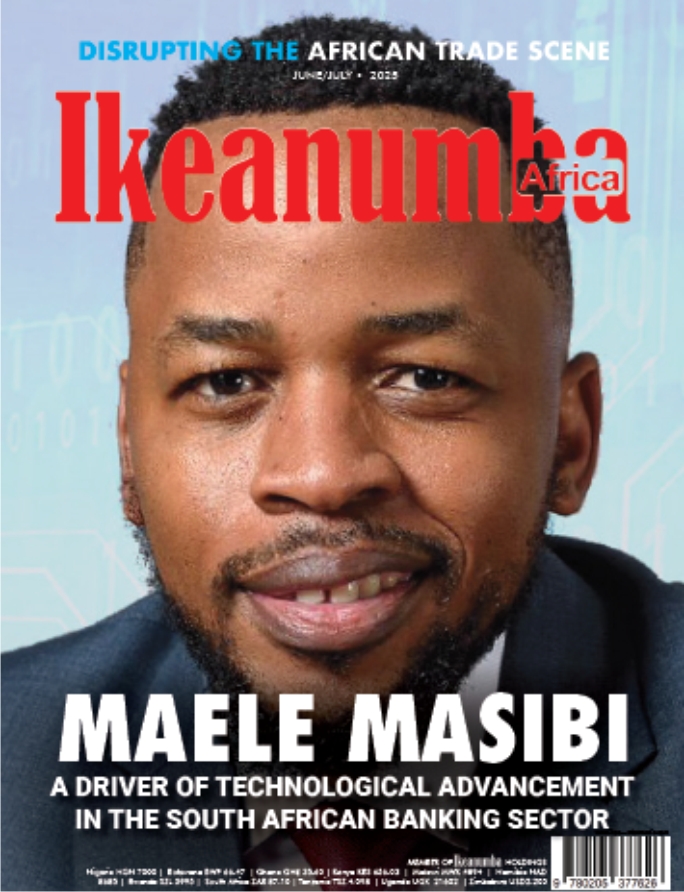
Tell us about yourself, especially something the general public does not know. When growing up, I discovered that I had a strong avidity for knowledge and learning new things. I’m a highly observant—thoughtful, private, and comfortable spending time with my family and close friends.
would say that one thing the public does not know about me is that I never really set out to be in the IT sector. When I was growing up, I wanted to be an economist. My early childhood education focused on commercial subjects such as economics, accounting, and business management. I was also fortunate to grow up in a family with a strong history of community-based leadership. As such, this had a profound impact on my outlook on life. It’s not surprising that I set out early on to one day become an economist when I graduated from university.

In addition to my professional interests, I have a strong passion for music and camera production. These creative outlets allow me to explore different perspectives and express myself in ways that complement my analytical side.
Your name pops up well in the IT sector in South Africa. Tell us how that journey began.
My journey into the IT sector began by pure chance—or perhaps, sheer luck. While studying at North-West University in early 2005, I came across a new discipline: Business Statistics. My original plan was to pursue a career in economics after graduation. Although I had a strong theoretical background, I realized I needed to build practical skills in working with data—something essential for any aspiring economist.
At the time, the university offered limited coursework in econometrics, which would have helped bridge theory with hands-on data analysis. Instead, I discovered that I could major in statistics. This pivot allowed me to stay aligned with my goal of becoming an economist while equipping myself with a strong foundation in statistical methods and data analysis.
What I didn’t anticipate was that a major in statistics would require me to tackle data challenges beyond just economic datasets. Economics was only a small subset of what we explored. I found myself working on case studies and data problems across a wide range of industries: government, mining, healthcare, small business, marketing, and technology.
It was during my second year that I began to question whether I truly wanted to be an economist. The passion was still there—I continued studying economics-related subjects— but I felt increasingly drawn to solving complex problems through data. That curiosity led me to research careers that could harness this newfound interest. In 2006, I discovered management consulting—a field that seemed to perfectly blend data-driven problem solving with real-world business challenges. According to Google, it was the ideal place to start.
Over 16 years of driving technological advancements, can you share some of the challenges?
From a personal point of view, one of the biggest challenges I’ve faced has been the ongoing journey of continuous learning and self-discovery. In a fast-evolving technological landscape, staying relevant requires constant upskilling and adaptation.
When it comes to technology initiatives, one of the most consistent challenges has been navigating the complexity of change. This has been a recurring theme across nearly every project I’ve had the pleasure to be part of.
Between mining, banking, and the public sector, which of these industries resonated better with you?
I consider myself very fortunate to have started my career with an internal consulting firm. This provided a rare opportunity to be placed on assignments across various industries, solving problems related to large-scale technology implementations.
As my career progressed, I began to realize that banking-related projects resonated more deeply with me. I recall a time when I was working on consulting projects for coal mining companies, where we were tasked with implementing a new ERP (Enterprise Resource Planning) system. Coming from a commercial rather than an engineering background, I found it difficult to fully appreciate the intricate operations of a coal mining plant—though I clearly understood the business problems we were there to solve. On some occasions, we even had to go underground at one of the plants to gain a better understanding of the operational environment.
Over time, I recognized that I was naturally drawn toward the banking sector, largely due to my commercial education and strong interest in economics. Despite the diverse and valuable exposure I gained through management consulting, I eventually reached a point in my career where banking felt like the most natural fit. Today, I am passionate about solving technology-related challenges within the financial services sector.
That said, my time in consulting also taught me that career interests can evolve over time. What excites and inspires us can shift with new opportunities and experiences. While banking is currently where my focus and passion lie, I remain open to the possibility of exploring new industries in the future—especially where I can continue to add value and grow.
You wear so many caps, business analyst, process designer, strategist, etc, which of them is more fulfilling for you?
As my career developed, I initially focused heavily on business analysis and process work—roles that were primarily execution-oriented. However, as I advanced to more senior positions, I recognized the need to cultivate strategic thinking skills. Consequently, I now find greater fulfillment in strategy-related work.
What motivates you to always strive for excellence in everything you do?
Hard work, hard work, and more hard work. I learned this early in life from my mother—not just because she told me to prioritize working hard on my studies, but because I saw her live by that principle every day.
As I grew older, I also embraced this value through the teachings of my spiritual mentor, Andre Oliver, who writes in his book Becoming A Person of Excellence that “the difference between mediocrity and excellence is effort.” He further explains, “Excellence has nothing to do with the amount of money you have, but the amount of effort you put in.”
Early in my career, I realized there is a high demand for people who strive for excellence. In general, if you commit to excellence, others will notice you and want to work with you. In the industry I’m in, this principle is especially important.

Run us through your average day at First National Bank in SA?
My day generally starts very early—often as early as 5:30 a.m.—when I prepare by reviewing product performance metrics for the capabilities I oversee. I also reflect on continuous executive (EXCO) feedback to identify areas for improvement.
I then bring these insights into meetings with cross-functional teams, including product managers, solution specialists, project managers, IT professionals, and designers, to discuss product roadmaps, prioritize projects, and align on strategic objectives.
Throughout the day, I engage with customers, stakeholders, and industry experts to stay informed about market trends and emerging technologies. I also collaborate closely with my CEO and other members of the executive team, navigating the complexities of product development while balancing short-term goals with a long-term vision.
• You love reading books at your leisure. Share some of the most memorable books you have read.
I generally focus my reading on four main themes: spiritual development, leadership, personal growth, and business strategy. I usually try to avoid fiction; however, Maru by Bessie Head and The Chamber by John Grisham were exceptions. I read these two books back in high school, and they truly sparked my love for reading due to the exceptional quality of their writing.
Below are some of the memorable books I’ve had the pleasure of reading:
Becoming a Person of Excellence by Ps. André Olivier
The Lean Startup by Eric Ries
Playing to Win: How Strategy Really Works by Alan G. Lafley
Grit by Angela Duckworth
Rich Dad’s Cashflow Quadrant by Robert Kiyosaki
The 7 Habits of Highly Effective People by Stephen Covey
Failing Forward by John Maxwell
Long Walk to Freedom by Nelson Mandela
The Chamber by John Grisham
Maru by Bessie Head
How does being an architect and banker merge into one? Kindly explain.
Having the opportunity to explore the evolution of modern banking technologies and capabilities through the lens of business architecture is both a privilege and an art. My current role allows me to work with an exceptionally talented team to deeply understand the strategic business problems the organization aims to solve, and to identify value-adding solutions that can be leveraged today and into the future.
Traveling is a form of education, do you agree and why?
I must fully agree. My own experiences traveling to various parts of the world— including the USA, Europe, Asia, and several African countries—have had a profound impact on how I think. I clearly recall that my first international trip was to the USA, where I attended a consulting training program in Chicago. Being in that environment exposed me to working with professionals from diverse cultures. This experience laid the foundation for my ability to comfortably manage complex projects that require engaging stakeholders from around the world.
Some of the innovations my team and I introduced within the South African banking space were inspired by lessons learned from similar banking organizations in Europe during a work assignment.
How do you motivate your team when there is a project to accomplish?
Working with a highly motivated team requires more intentionality than I initially anticipated when transitioning from a specialist to a leadership role. Having clarity of purpose and a clear understanding of the overarching vision that the team needs to strive for is critically important.
Throughout my leadership journey, I’ve discovered that teams become more motivated when they understand how their contributions align with the overall strategy we are collectively executing. With that in mind, I make it a priority to communicate effectively and empower the team to find the best solutions based on their expertise.
While I provide guidance, I always encourage the team to make decisions that serve the best interests of the organization.
What’s the next big thing on your bucket list?
I believe there are many opportunities to contribute to the broader evolution of Information Technology projects across the African continent. While the future cannot be predicted, this is where the bulk of my interest and focus lie, and I am excited to see where this journey leads.
Where do you see your country getting to in the future due to the many innovative values you have added to it in your own way?
I’m extremely excited about the future of technology and innovation in South Africa. While our country faces its own challenges, recent advances in AI, machine learning, cybersecurity, 5G connectivity, cloud computing, and Fintech convince me that the future of innovation remains bright.
What are we to expect next from Maele Masibi?
The world of customer experience is of keen interest to me. My MBA research project focused on exploring “Customer Experience-Centered Designs in Contact Centre Interactions.” I am eager to further develop my research interests within the industry and contribute meaningfully to the ongoing discourse in Information Technology.
Looking ahead, I aspire to grow into a leadership role where I can make a significant impact—not only by driving innovation but also by inspiring and empowering the next generation of young professionals across the continent
The 10 Highest-paid African footballers.
Over the years, more and more players from the African continent have played for some of the world’s biggest clubs and, as a result, they’ve become some of the highest-paid footballers on the planet.
Since the turn of the 21st century, there has been a huge influx of football talent coming from Africa. The popular Premier League has seen plenty of foreign talent come to England, but the game has gone global to a level that it has never previously reached.
In recent years, especially, the level of wages being paid to players has only gotten higher and higher, and it’s currently at a level that seemed unimaginable. We have decided to Torchlight the high flyers and their respective clubs.
1. Riyad Mahrez -£860,944-a-week
Club: Al-Ahli
The highest-paid African footballer in the world. It’s hard to imagine anyone predicting that would be the case when Riyad Mahrez first signed for Leicester City back in 2014. The forward has become one of the best players in the world since then, though, winning the Premier League with the Foxes and becoming a megastar in the process.
2. Sadio Mane – £660,194-a-week
Club: Al-Nassr
He’s a huge star and a recognisable face, something which the Saudi Pro League was desperate to add over the summer.
After a solitary season at Bayern Munich, where Sadio Mane failed to replicate the form he’d shown at Liverpool, he was offered a ridiculous salary to join Ronaldo at Al-Nassr. £660,194 every single week is a wild number. The forward has earned a reputation for being one of the most electric players in the world, though, following his exploits at Anfield. He was one of many players who came to Saudi Arabia and was offered massive money to do so. Only one African player is currently on more money than he is a week and that’s another former Premier League man who joined the Saudi Pro last summer.
He then went on to join Manchester City and was a focal point to Pep Guardiola’s dominance there for several years. Now, at 32 years old, he’s earning more money than he ever has in his life. Close to £1m a week at his age is pretty wild. He’s scored nine times and recorded seven assists in his first 20 games for Al-Ahli, so it’s not quite blistering form, but still quite impressive.
3 Kalidou Koulibaly – £570,984-a-week
Club: Al-Hilal
After making a name for himself at Napoli as one of the best centre-backs in Europe, Kalidou Koulibaly joined Chelsea in 2022. He may have waited too long, though, as by the time he he was on the wrong side of 30 and struggled to keep up with the pace of the English top flight.
He left Stamford Bridge after just one season with the Blues, joining Al-Hilal in the Saudi Pro League. He did so, pocketing a monumental £570,984 a week which is an astonishing figure for the 32-year-old. It’s hard to say whether he’s earned such a massive figure, but he’s definitely helped his club establish a healthy lead at the top of the league and seems almost certain to win the trophy at the end of the season, so there’s that.
4 Mohamed Salah – £350,000-a-week
Club: Liverpool
It’s Mohamed Salah, is anyone really that surprised? The Egyptian has been a sensation at Liverpool and it can’t be overstated just how important he’s been to Jurgen Klopp’s side over the years.
The club has benefitted tremendously from his presence over the last few years, and it’s hard to imagine they’d have been half as successful if they hadn’t brought him into the fold back in 2017. With so many clubs interested in prying him away from Anfield, the Reds decided to offer Salah bumper new deal on £350,000 a week in the summer of 2022, but considering just how good he’s been this year, it was the right call.
5 Seko Fofana – £250,114-a-week
Club: Al-Nassr
Seko Fofana was an impressive talent who had caught the attention of several clubs around Europe during his time at Lens, but he made the surprising decision to move to the Saudi Pro League and join forces with Cristiano Ronaldo at Al-Nassr instead. As a result, he was handed a salary of over a quarter of a million pounds a week, so it’s easy to see why he made the call.
The midfielder hasn’t had quite as much success in Saudi Arabia as he did in France, though, and after half a season with Al-Nassr, he’s been loaned to fellow Saudi Pro League side Al-Ettifaq. Hopefully, he can rediscover his form at the club, otherwise, it won’t be long before that lofty salary is looked at as a huge mistake.
6 Achraf Hakimi – £239,418-a-week
Club: PSG
One of the most talented full-backs in the world, you could argue that Achraf Hakimi should probably actually be on more money considering just how many teams have been interested in him over the years. The clubs he’s played for read like a real who’s-who of top European sides. Starting with Real Madrid, it was a loan spell at Borussia Dortmund that saw him emerge as an elite talent.
He then spent one season at Inter Milan and flourished in Italy, before Paris Saint-Germain spent big to bring him to France in 2021. In the years since, the Moroccan has regularly been one of the Ligue 1 club’s standout stars and considering he’s still just 25 years old, he might be due a pay-rise in the future too.
7 Franck Kessie – £230,368-a-week
Club: Al-Ahli
After a short break, we’re back with another star who’s earning major money in the Saudi Pro League. It’s another player on Al-Ahli’s books too, as Franck Kessie is earning just over £230,000 a week at the Saudi Arabian club. The Ivory Coast international made a name for himself at AC Milan but joined Barcelona in the summer of 2022.
His time in Spain was rough, and after just a year, he moved to Al-Ahli and has been on a very nice salary ever since. He’s more than doing enough to earn it as well. In 21 appearances for his new club this season, he’s already scored six times. Not bad for a centre midfielder.
8 Victor Osimhen – £211,000-a-week
Club: Napoli
While a lot of the players on this list are likely earning the most they ever will, Victor Osimhen is a star who’s almost guaranteed to earn a pay-rise in the near future. The striker has been nothing short of sublime for Napoli in Serie A over the last few years, and with so many clubs keen to take him off of the Italian club’s hands, it feels safe to assume he’ll be on the receiving end of another bumper contract soon.
With clubs like Chelsea interested, there’s no telling just how much Osimhen will earn in the future, but it will likely see him climb this list quite significantly. He’s earned it too. There are few goalscorers of his calibre on the planet, and considering he only recently signed the new deal, he’s going to cost a hell of a lot to pry away.
9 Thomas Partey – £200,000-a-week
Club: Arsenal
After impressing at Atletico Madrid, Arsenal signed Thomas Partey in 2020 and right off the bat, offered him pretty large wages. The Gunners activated his release clause at Atletico and paid £45m to bring him to England while paying him £200,000 a week once he made the move.
He’s been a dependable figure in the middle of the park for Mikel Arteta’s side ever since, but considering he’s now 30 years old, has played just four league games this season and his contract expires next summer, it’s hard to imagine he’ll be making this sort of money for much longer.
10 Inaki Williams – £187,585-a-week
Club: Athletic Bilbao
Spending pretty much his entire senior career at Athletic Bilbao, it’s quite fitting that Inaki Williams has been rewarded by the club with such a large weekly wage. The forward is a legend at the Spanish club and has been performing at a high level for them for close to a decade now.
Despite constant rumours about a move away, he’s never forced himself out of Bilbao and has remained focused on the team throughout his entire run. There are few club icons quite like him in the world, and he’s deserving of every penny he gets from Bilbao. With his current contract running until the summer of 2028, it’s unlikely he’ll be leaving anytime soon either.
