

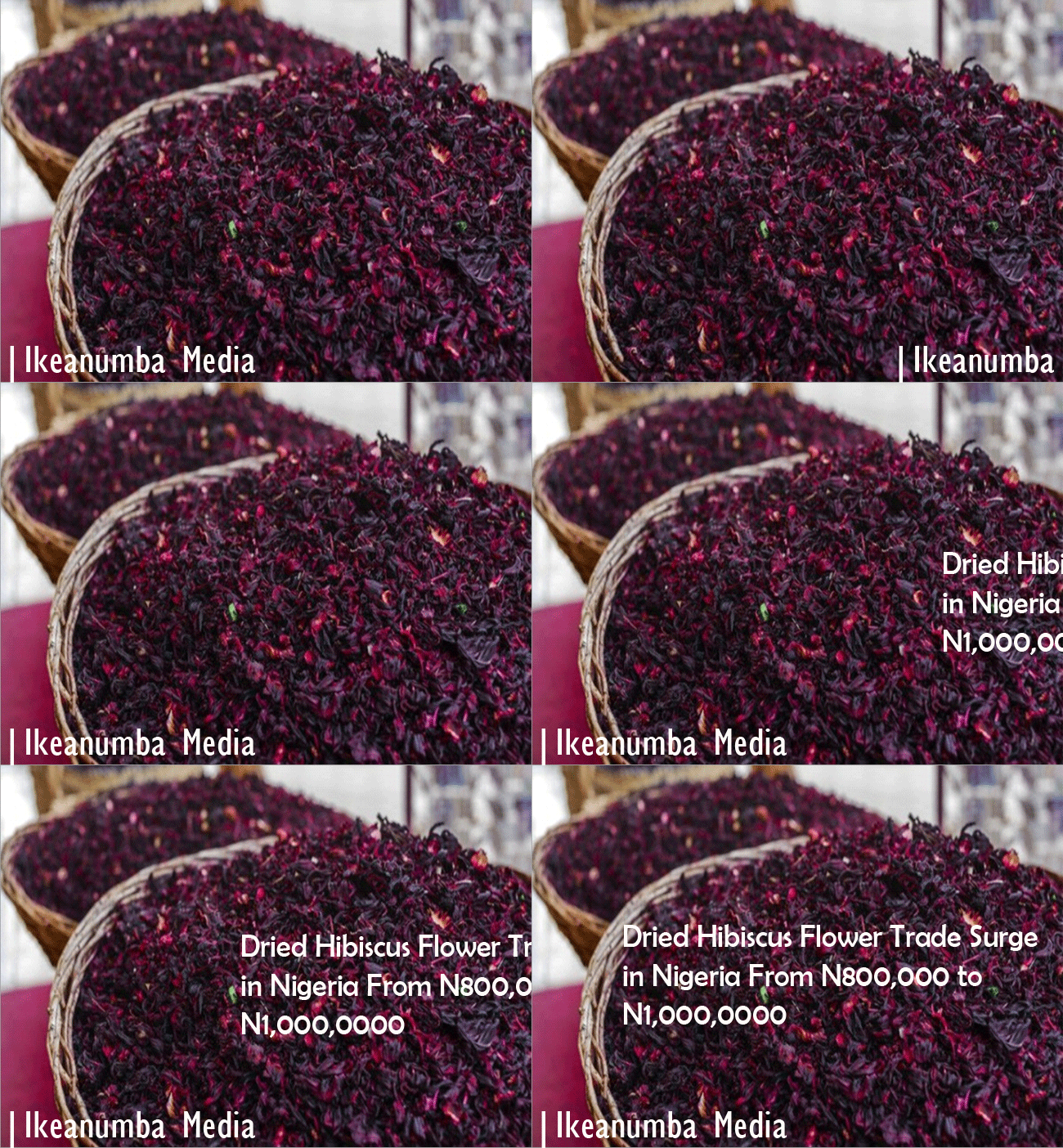
Hibiscus plant is an essential perennial herb scientifically known as Hibiscus sabdariffa, is fast becoming the most sought after staple product. The Food and Agriculture Organization (FAO) post-harvest report noted that the hibiscus plant, commonly known as Roselle, is among the highest-volume botanical products in global commerce.
The plant is drought-tolerant, relatively easy to cultivate, and well- suited for multi-cropping systems.
Nigeria’shibiscus cultivation is witnessing a resurgence as farmers who were once driven out of business due to the ban imposed by Mexico, are returning to the trade.
The industry is attracting new entrants, lured by its profitability, and with exports now reaching markets in Mexico, the United States Europe, and Asia, the sector is ready for greater expansion. Hibiscus, an essential perennial herb scientifically known as Hibiscus sabdariffa, is fast Europe, and Asia, the sector is ready for greater expansion.

The price of dried hibiscus flowers has surged, selling between ₦1.7 million and ₦2 million per tonne, up from a previous range of ₦800,000 to ₦1 million. The flower’s uses extend beyond Nigeria’s popular zobo drink; it is also processed into jellies, jams, syrups, teas, fruit pastes, and traditional medicines, making it one of the highly sought-after commodities in the food and beverage industry.
Also, the plant’s anti-hypertensive and food- colouring properties have captured the attention of pharmaceutical manufacturers worldwide. Hibiscus is cultivated in Jigawa, Katsina, Bauchi, Kano, Maiduguri, Kebbi, and Sokoto, with Jigawa being the largest producer. The flower grows during the dry season between November and April, and once harvested in October, it remains available in storage until August or September. In Mexico, hibiscus is widely used to produce Agua de Jamaica, a popular drink made from steeped hibiscus flowers, diluted with water, and sweetened with sugar.
Nigeria ranks among the world’s top producers and suppliers, with five different varieties of hibiscus growing in the country’s northern regions. According to Tunji Lawal, President of the Association of
Hibiscus Flower Exporters of Nigeria (AHFEN), Nigeria is the only country in Africa that is accessible to Mexico at the moment. Hibiscus farming is also driving economic empowerment in rural communities, and Agro-allied firms are investing heavily in the hibiscus value chain, supporting farmers with inputs and serving as off-takers for harvested crops.

Beyond its economic impact, hibiscus farming is proving to be a power full tool for rural transformation. According to Agricultural Research (IAR), Ahmadu Bello University, Zaria, Nigeria, is sitting on a hibiscus goldmine, as it can be growing nearly all the northern states. The Association of Hibiscus Flower Exporters of Nigeria (AHFEN) also estimated the industry’s worth to be at about $100 million, presenting a strong foreign exchange potential, particularly in the wake of Nigeria’s diversification from oil.
When it comes to hibiscus production, Nigeria has a significant opportunity to solidify its position as a global leader. With strategic investments, education, and improved processing techniques, hibiscus export could become one of Nigeria’s major non-oil revenue sources, boosting the economy and the livelihoods of rural farmers.
#Zaria #Ahmadubellouniversity #AHFEN #Hibiscusflower #Zobodrink #FAO #Agriculturalresearch #Nigerianexport #hibiscusgoldmine
