

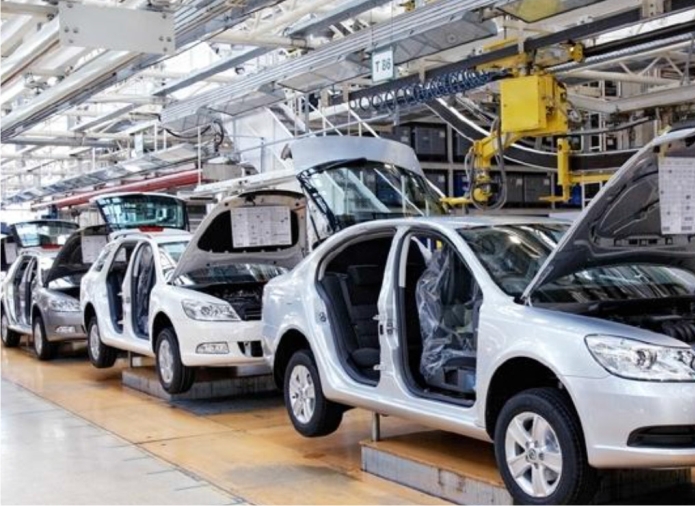
Dangote Peugeot Automobiles Nigeria Limited (DPAN), a joint venture by Africa’s richest man, Aliko Dangote, is turning heads across the continent with its latest accomplishments: the local assembly of the Peugeot 3008 GT, a globally acclaimed SUV and the rollout of the Peugeot Landtrek pickup. Announced in early 2025, these achievements represent more than just new additions to the market; they’re a bold step forward in Nigeria’s pursuit of industrial self-reliance and a testament to his ever-expanding ambitions, as he sets his sights on yet another key sector of the Nigerian economy.
To truly understand the weight of DPAN’s latest moves, it’s important to rewind and understand how this ambitious journey began. Aliko Dangote, the billionaire whose name is deeply embedded in Nigeria’s industrial DNA, thanks to his dominance in cement, sugar, and, most recently, oil refining, has never been one to be scared of exploration. In 2016, he had made a decisive move into the automotive space. By joining forces with the Kaduna State Government and the Bank of Industry, he secured a majority stake in Peugeot Automobile Nigeria (PAN), a company that had once at the center of Nigeria’s car manufacturing landscape.

For those who remember, Peugeot was once a household name in Nigeria. Throughout the 1980s and early 1990s, models like the Peugeot 504 and 505 were icons on the roads, favored by government officials, corporate elites, and everyday Nigerians alike. But the good times didn’t last. A combination of economic instability, erratic government policies, and the introduction of more affordable Asian imports into the Nigerian market gradually reduced Peugeot’s dominance. The brand, once synonymous with reliability, faded. By the time he entered the picture, PAN was on life support struggling to stay relevant in a changing landscape. But with fresh capital, strategic vision, and the weight of the Dangote name behind it, DPAN is now poised for a remarkable comeback. These recent achievements aren’t just about producing cars, they represent a revival of Nigerian manufacturing and a renewed hope that the country can, once again, become a force to reckon with in the global auto industry.
In 2017, he took another bold step in his journey to industrialise Nigeria, this time in the automotive sector. He secured a license to establish a Peugeot assembly plant, setting in motion what would become a major game changer for the local car industry. By 2022, Dangote Peugeot Automobiles Nigeria Limited (DPAN) was born, a collaborative venture between Dangote Industries Limited, the governments of Kaduna, Plateau, and Kebbi States, and Stellantis Group, the global automotive giant that owns Peugeot. From its base at the Greenfield Ultima Assembly Plant in Kaduna, DPAN has emerged as a symbol of what’s possible when ambition meets collaboration.

With the capacity to roll out 120 vehicles per day, the Kaduna plant is nothing short of a modern marvel. Outfitted with state-of-the-art equipment and built with a focus on quality and efficiency, the facility is primed to serve Nigerian motorists with vehicles tailored to their needs. The relaunch of the Peugeot brand in Nigeria kicked off with the assembly of the Peugeot 301 sedan, followed by the 5008 and 508 models. Now, with the introduction of the Peugeot 3008 GT and the Landtrek pickup, DPAN is aiming even higher, determined to restore Peugeot’s past glory and shake up a market long dominated by imported vehicles.
A Game Changer on Nigerian Roads
Rolling off the Kaduna assembly lines, the Peugeot 3008 GT is far from just another SUV. Sleek, sophisticated, and packed with tech, the 3008 GT has already made a name for itself on the global stage, winning awards and praise for its design and performance. Under the hood, it boasts a 1.6-liter turbocharged engine that balances power and fuel efficiency, perfect for Nigeria’s diverse driving conditions, whether for cruising the streets of Abuja or navigating rural backroads in the North.
The 3008 GT is more appealing because it is being made right here in Nigeria. For a country heavily reliant on imported vehicles. Local production means reduced costs, more accessible pricing, and less pressure on the nation’s foreign exchange reserves. It also gives DPAN a significant edge in pricing, enabling it to compete effectively with fully imported models.
Beyond its design and performance, the 3008 GT is a triumph of technology. The Kaduna plant features cutting-edge digitization and automation, pushing Nigerian manufacturing to new heights. At the 46th Kaduna International Trade Fair in February 2025, Fatima Wali Abdurrahman, Senior Advisor to the President of Dangote Group, emphasized how these innovations are streamlining operations and raising quality standards, mirroring the efficiency gains seen in Dangote’s cement operations. With an annual production capacity of 44,000 vehicles, DPAN is positioning itself as a serious contender in Africa’s automotive space.
While the 3008 GT appeals to the premium market, DPAN’s newly launched Peugeot Landtrek pickup is built with a different audience in mind. Launched alongside the SUV, the Landtrek 4×2 model features a 2.4-liter engine and rear-wheel drive, offering durability and versatility in equal measure. Whether you’re a farmer hauling produce or a contractor navigating rough work sites, the Landtrek is designed to get the job done. And DPAN isn’t stopping there, they’ve hinted at a 4×4 version that would make the pickup even more adaptable to Nigeria’s varied terrain.
The Landtrek marks a pivotal expansion of DPAN’s lineup, allowing it to step into the competitive light commercial vehicle segment. It’s more than just a new product, it’s a strategic move to offer practical, locally built alternatives to expensive imported pickups. Assembling the Landtrek in Kaduna not only supports local jobs but also strengthens domestic supply chains, from steel suppliers to electronics manufacturers. It’s a ripple effect that touches every corner of Nigeria’s industrial ecosystem.
But perhaps the most exciting part of the Landtrek’s story lies in its potential to uplift small and medium-sized enterprises (SMEs), which form the backbone of Nigeria’s economy. For countless entrepreneurs and trades people, transportation is a major hurdle, one made worse by the high costs of imported vehicles and spare parts. A dependable, Nigerian-assembled pickup like the Landtrek could be a game changer, providing affordable, efficient mobility for businesses across the country.
The Road Ahead
As DPAN ramps up production of the Peugeot 3008 GT and rolls out the Landtrek pickup, the future looks promising but demanding. The company’s ability to scale production, maintain quality, and compete with imported vehicles will determine its long-term success. Expanding its model lineup, as hinted with the potential 4×4 Landtrek, will be critical to capturing diverse market segments. Partnerships with Stellantis Group provide access to global expertise and innovation, but DPAN must also invest in local talent and research to develop vehicles tailored to African needs.
For Nigeria, DPAN’s achievements are a beacon of hope. The Kaduna plant is proof that the country can overcome its industrial challenges and emerge as a manufacturing hub. The government must seize this moment, enacting policies that protect local industries while fostering an environment conducive to investment. Consumers, too, have a role to play by embracing “Made-in- Nigeria” products, and supporting the vision of self-reliance.
The Peugeot 3008 GT and Landtrek pickup are more than vehicles; they are symbols of ambition, resilience, and progress. As he continues to push the boundaries of what is possible, Nigeria stands at the cusp of an automotive revolution one that could redefine its place in the global economy.
These milestones by Dangote Peugeot Automobiles Nigeria (DPAN), symbolize more than just vehicle production, they represent industrial revival, job creation, and a move toward economic self-reliance. DPAN is bridging innovation and local potential. As it scales operations and expands its lineup, DPAN’s impact will resonate across supply chains and small businesses alike. This bold initiative positions Nigeria as a rising force in Africa’s auto industry, driving a future where “Made-in-Nigeria” is a mark of quality and pride.
