

As one of the largest and populous economies in Africa, Nigeria has given rise to numerous multinational companies that have expanded their footprint across the continent. These Nigerian multinationals have not only contributed significantly to the country’s economy but have also positioned themselves as key players in Africa’s business landscape.
In this article, we take a closer look at some of the Nigerian multinational companies with the most substantial presence across Africa. These companies have built strong brands, established extensive networks, and adapted to diverse markets, further establishing Nigeria’s role as a business hub in Africa.
Here are the multinationals shaping the landscape in the African business world.
- The Dangote Group is founded and owned by Aliko Dangote – he leads the region’s largest conglomerate, with operations in 17 African countries and a dominant presence in cement production. At the heart of his business empire is Dangote Cement Plc, West Africa’s largest publicly listed company and the first Nigerian firm to secure a spot on the Forbes Global 2000 Companies list. The cement giant has fueled much of the continent’s infrastructure expansion, supplying materials for roads, bridges, and skyscrapers from Lagos to Accra. Beyond cement, the Dangote Group has aggressively diversified, venturing into agriculture, food production, and energy. The company is currently undertaking one of its most ambitious projects yet: the construction of Africa’s largest petroleum refinery, petrochemical plant, and fertilizer complex. Its $20 billion refinery, which has been completed, has begun serving the West African oil market.
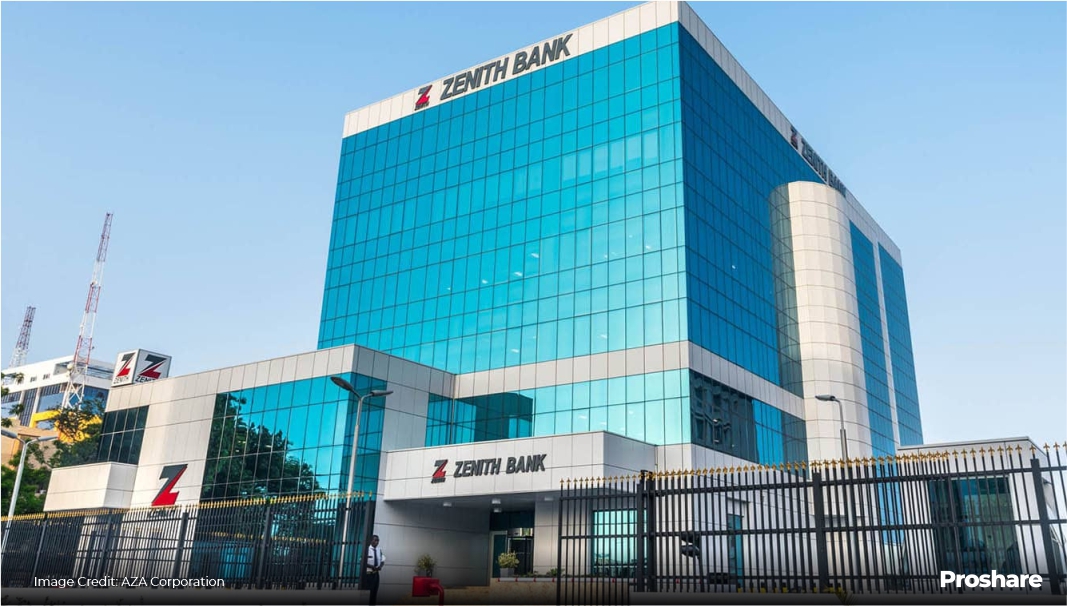
2. Zenith Bank Plc was founded in May 1990 by Jim Ovia, CFR., and commenced operations as a commercial bank in July of the same year. Since then, it has evolved into Nigeria’s largest bank by tier-1 capital and one of the top 10 banks in Africa. Headquartered in Lagos, Nigeria, Zenith Bank operates 393 branches across Nigeria and has expanded internationally with subsidiaries in key African markets: Additionally, Zenith Bank has a subsidiary in the United Kingdom, Zenith Bank (UK) Limited, which was licensed by the Financial Services Authority (FSA) in March 2007. The bank also maintains a representative office in China and has expressed plans to further expand into Europe and Asia. Zenith Bank has a market cap or net worth of N1.59 trillion as of January 29, 2025. Its market cap has increased by 7.29% in one year.
3. Guaranty Trust Holding Company has established itself as a cornerstone of financial services in Africa, with a presence spanning Anglophone and Francophone West Africa, East Africa, and Europe. Founded in 1990 by Tayo Aderinokun and Fola Adeola, GTBank has grown rapidly over the last three decades, driven by a commitment to excellence, professionalism, and a strong focus on customer satisfaction. The bank has built an impressive asset base exceeding N3.11 trillion and employs over 10,000 professionals across 11 countries, including Nigeria, Côte d’Ivoire, Ghana, Kenya, and the United Kingdom. Headquartered in Lagos, the bank has successfully expanded across the African continent, with operations in Gambia, Liberia, Rwanda, Sierra Leone, Uganda, and Tanzania. Guaranty Trust Bank currently boasts a market capitalization of N2.1 trillion as of January 30, 2025. A key milestone in the bank’s growth story is its role in digitizing banking services in Nigeria, positioning it at the forefront of technological advancement in the financial sector.
4. Sahara Group is a global energy and infrastructure powerhouse. Founded in 1996 by Tonye Patrick Cole and Temitope Shonubi, the company operates across 42 countries in Africa, Europe, the Middle East, and Asia. Its power subsidiary, SPG, is the largest privately owned, vertically integrated power company in Sub- Saharan Africa. With an ambitious target of 5,000MW generation capacity by 2026, SPG is redefining the region’s energy landscape.
SPG’s assets include Egbin Power Plc.., the largest thermal power plant in Sub-Saharan Africa (excluding South Africa), alongside Afam, Eleme, Trans Amadi, and Omoku plants.
The company made bold moves in Nigeria’s power sector, acquiring majority stakes in Egbin Power Plc.. and Ikeja Electric Plc., two key assets from the privatized Power Holding Company of Nigeria (PHCN). It also holds a 70% stake in First Independent Power Limited (FIPL), strengthening its dominance in energy distribution.
With $17.5 billion in consolidated revenue and a workforce of over 5,300, Sahara Group continues to shape Africa’s energy future through innovation, investment, and strategic expansion.
5. UBA Group: Founded over 70 years ago, United Bank for Africa (UBA) is a prominent financial institution based in Lagos, Nigeria. Recognized as one of Sub-Saharan Africa’s most influential banks, UBA operates across 20 African countries, the United Kingdom, the United States, the UAE, and has a representative office in France. With a market capitalization of N1.2 trillion, UBA has established a solid presence on the global stage, notably being the only Sub-Saharan African bank with a deposit-taking license in the U.S.. UBA serves over 45 million customers through 1,000 business offices, 2,669 ATMs, and 87,000 PoS terminals. The bank offers a comprehensive range of services, including corporate, commercial, SME, consumer, and personal banking, along with pension custody services. In 2022, UBA expanded further by opening operations in Dubai, reinforcing its commitment to becoming a truly global financial player. Under the leadership of Tony Elumelu, who serves as chairman of the company, and Oliver Anwuba as CEO, UBA continues to drive financial innovation, maintaining
decades of consistent growth and offering a wide array of services that cater to diverse customer needs across its expansive footprint.
6. Access Bank Plc has grown from a relatively unknown Nigerian bank into one of Africa’s leading financial institutions over the past 26 years. As one of Nigeria’s five largest banks by assets, loans, deposits, and branch network, it has built a strong reputation for delivering innovative financial solutions across corporate, business, and personal banking. A wholly owned subsidiary of Access Holdings Plc, the bank operates more than 700 branches and service outlets across three continents, serving 60 million customers in 24 markets. It has subsidiaries across sub- Saharan Africa, a branch in Dubai, and representative offices in China, Lebanon, and India. Employing approximately 28,000 people, Access Bank continues to expand its global reach while maintaining a strong presence in Nigeria.
Listed on the Nigerian Stock Exchange since 1998, Access Holdings Plc has over 900,000 shareholders and a market capitalization of N1.4 trillion. The bank’s transformation began 23 years ago when Aigboje Aig-Imoukhuede and the late Herbert Wigwe acquired it, alongside key executives like Roosevelt Ogbonna from Guaranty Trust Bank. Their leadership reshaped Access Bank into a powerhouse in African banking, driving its continued expansion and innovation.
7. Interswitch, a leading African digital payments and commerce platform, has played a pivotal role in modernizing financial transactions across the continent since its founding in 2002.
The company’s journey began with founder Mitchell Elegbe, who was inspired to create Nigeria’s first electronic payment infrastructure after using an ATM in Scotland. Since then, Interswitch has expanded significantly, launching Quickteller, a retail payments ecosystem, and Verve, Africa’s first EMV-certified payment card. Headquartered in Lagos, the company operates in Nigeria, Kenya, Uganda, The Gambia, and Germany, with a mission to drive cashless transactions and seamless digital paymentsa Interswitch’s influence extends beyond Nigeria. In 2011, it acquired a 60% stake in Uganda’s Bankom, strengthening its East African presence. A 2014 majority stake acquisition in Kenya’s Paynet Group. The company has also partnered with global firms, including Discover Financial Services, to expand its payment processing capabilities. In January 2023, the Central Bank of Nigeria granted Interswitch a Payments Service Holding Company (PSHC) license. With over 11,000 ATMs in its network and a growing presence in Africa, Interswitch remains at the forefront of digital payment innovation.
8. Air Peace, Nigeria’s largest airline and a major player in West African aviation, continues its expansion with a growing international network spanning 12 countries. As of February 2025, the airline serves 17 domestic and 11 international destinations, including Mumbai, Israel, South Africa, and several West and Central African nations.
Founded in 2013 by Nigerian businessman Allen Onyema, Air Peace was established with the vision of creating economic opportunities for Nigerians through aviation. It launched operations with Dornier 328 and Boeing 737 aircraft, expanding rapidly to become Nigeria’s dominant carrier. The airline’s first international route to Accra, Ghana, began in 2017, followed by intercontinental flights to the UAE and South Africa. Currently, Air Peace operates flights to major international destinations, including: Cameroon: Douala (Douala International Airport), Gambia: Banjul (Banjul International Airport), Ghana: Accra (Kotoka International Airport), Ivory Coast: Abidjan (Félix Houphouët Boigny International Airport), Liberia: Monrovia, Senegal: Dakar (Blaise Diagne International Airport), Sierra Leone: Freetown (Lungi International Airport) In 2019, Air Peace gained international recognition for offering free evacuation flights for Nigerians stranded in xenophobic attacks in South
