

Fabrics has long been a significant player in Nigeria culture: vibrant ankara, intricate adire, bold wax prints. It’s Nigeria’s heartbeat, woven into every celebration, every identity.
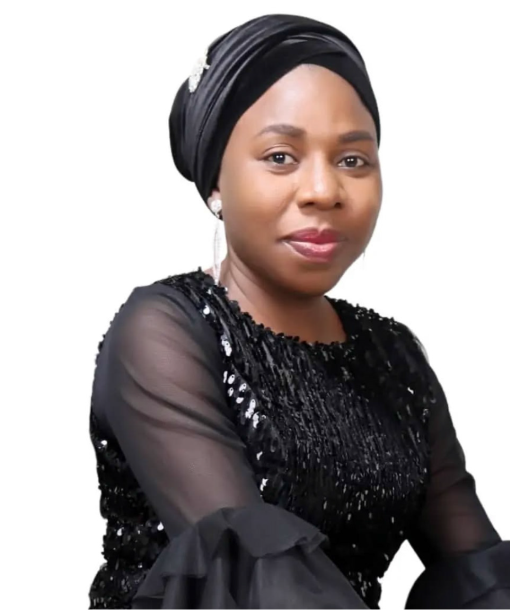
But behind the beauty lies a problem most don’t see: textile waste. Piles of discarded scraps, and worn-out clothes. However, one woman, Sidikat Folami, is changing that. Through her company, Mateen Lander, she’s not just cleaning up the mess, she’s rewriting what Nigeria’s textile industry could be.

She was born in 1983 in Kaduna, to parents from Ijebu-Mushin, in Ogun state. Even as a kid, she was different Her mom used to joke, half-serious, that she was a “witch”, not in a mean way, but because she had this knack for spotting solutions no one else could. Growing up, textiles were everywhere. Tailors doing business in neighborhood shops, leaving scraps on the floor. Markets buzzed with vendors hawking fabrics for weddings, funerals, everything in between.
Fast-forward to her twenties, and she found herself in the fashion industry, making bulk garments for companies in the UK and US. It was relentless new designs every day to keep up with global trends. But the waste was impossible to ignore. Every cut of fabric left behind scraps. “In Nigeria, fashion moves fast,” she said in an interview years later. “You’re always chasing tomorrow’s style. But what happens to what’s left behind?” That question became her obsession.
Nigeria’s textile story wasn’t always one of waste. Back in the 1970s and 80s, the industry was a giant, employing over 450,000 people. But cheap imports first from China, then second-hand clothes from the West, gutted it. Today, Nigeria shells out $4 billion a year on imported textiles, much of it low-quality or counterfeit. Those clothes wear out fast, ending up in dumpsites. Lagos alone produces out 11,000 tonnes of waste daily, and textiles are a big part of that. She saw a crisis, but also a chance to clean up the environment, revive an industry, and put people to work.
The Birth of Mateen Lander
The idea for Mateen Lander started in 2019. She was fascinated by how some folks were turning plastic waste into bricks or bags. Could textiles do the same? She dug into sustainability, attending workshops and conferences. In 2022, a meeting with Olusola Idowu from Fashion Revolution started the whole idea. Idowu pushed her to focus on textiles, and suddenly, her path was clear.

Mateen Lander isn’t a typical recycling outfit. Launched in 2022, it’s about creating a whole system, a circular economy where textile waste isn’t trash but raw material. The company collects scraps from tailors, factories, even households, then fiberizes them, breaking them down into fibers for industries like construction or car manufacturing. Since August 2024, Mateen Lander has pulled 35 tonnes of textile waste from Lagos landfills. Collection centers in Ajah, Yaba, and Badagry hum with activity, sorting everything from ankara off-cuts to faded Okrika shirts.
She’s not just moving waste around. She’s building a network. A network of fashion, trend and resourcefulness. Her big push is finding industrial buyers; companies that need fibers for insulation, car seats, or eco-friendly packaging. Small buyers are out there, but they’re not enough to tackle Nigeria’s waste mountain. She’s trying to create a market for what everyone else calls garbage.
To get why her work matters, we have to see the scale of Nigeria’s textile waste problem. The country’s a dumping ground for the world’s fashion castoffs. Second-hand clothes, called Okrika, pour in from the US, Europe, Asia. Markets like Katangowa are flooded with bales of these clothes, but a lot torn, stained, or just out of style never sells. Globally, the fashion industry pumps out 100 billion garments a year. By 2030, that could double. In Nigeria, what doesn’t sell ends up in landfills, rivers, or burned in open pits.
Lagos, with 20 million people, feels the weight. The city’s waste systems can’t keep up. Textile waste piles up in places like the Korle Lagoon, choking waterways with microplastics and toxins. A ban on second-hand clothing imports exists, but smugglers sneak it in through Benin or Togo, undercutting local producers. Counterfeit textiles, slapped with “Made in Nigeria” labels, make it worse. The environmental cost is brutal: synthetics don’t break down, they just poison the ground. In Lagos, textile waste clogs drains, worsening floods every rainy season. Then there’s the health toll, communities near dumpsites breathe toxic fumes from burning fabrics.
Her approach cuts through this mess. Instead of upcycling, turning scraps into bags or quilts, which is great but small-scale, she’s going for recycling, breaking waste into fibers for big industries. It’s a tougher road but has bigger potential. Mateen Lander’s process could keep textiles out of landfills for good. But it’s expensive. Machines, transport, facilities, it all adds up, and funding for startups in Nigeria is a difficultbamd long journey.
Lifting Up Women, Building Communities
What makes her work flourish is how it touches people, especially women. Nigeria’s poverty rate is grim, 63% of people live in multidimensional poverty, and women get the short end of the stick. Her waste-to-wealth programs are changing that. She trains women to collect, sort, and process textile waste, giving them jobs and a sense of ownership. It’s not just money, it’s a purpose, a chance to be part of something bigger.
Her efforts showcases what’s happening in Lagos. The Lagos Waste Management Authority (LAWMA), just banned textile waste in landfills, starting from early 2025. They are working with markets like Tejuosho to collect scraps, and kids at LAWMA’s Academy, are learning to turn fabrics into useful materials: bags, mats, you name it. She’s tied into this, partnering with folks like Titilayo Oshodi, the governor’s adviser on climate change. Together, they’re pushing for policies to boost local textile production and make recycling easier. “We’ve got everything we need; cotton, talent, demand,” she says. “We just need to make it work.”
The manufacturing sector, including textiles, slipped to 14.79% of GDP in early 2024, down from 15.70% the year before. That’s the reality she’s working in.
Then there’s logistics. Nigeria’s waste systems are a patchwork, leaning on informal pickers who hustle but lack support. Moving textile waste from markets to processing centers means battling Lagos traffic and bad roads. Scaling up to other states, which she wants to do, means dealing with different rules and even less infrastructure.
The biggest hurdle might be cultural. Nigerians love their fabrics, ankara’s a status symbol, adire’s an art form. But fast fashion’s grip is tight. Cheap imports and social media trends push people to buy, wear, toss. Getting folks to care about sustainability takes work. She’s out there, talking to schools, churches, influencers, showing them that waste isn’t just a problem, it’s a resource.
A Bigger Picture
The opportunities, though, are massive. Nigeria’s young 70% of its 220 million, people are under 30. That’s a lot of energy, a lot of ideas. Countries like Bangladesh turned textiles into economic engines; Nigeria could too. Folami’s model, turning waste into raw materials, could birth a new industry, creating jobs and cutting pollution. It fits with global shifts toward circular economies, where nothing’s wasted. Europe’s pushing hard on textile recycling, Nigeria could lead Africa.
Her work is part of a broader wave. In Ghana, groups like the Or Foundation, are calling out the harm of second-hand clothing dumps. South Africa’s got companies like Faro, building circular systems. But Nigeria’s size and potential make it a heavyweight. If she pulls this off, she could inspire a continent, showing how waste can fuel progress.
Weaving a New Story
She’s not your average entrepreneur. She’s a dreamer who sees possibility in Nigeria’s textile waste, piles of scraps most people would ignore. Through Mateen Lander, she’s laying tracks for a sustainable industry that respects Nigeria’s roots, while reaching for the future. Pulling 35 tonnes of waste from landfills in a few months, is no small feat. With more money, better systems, and bigger partners, she could change the game.
This revolution’s about more than fabric. It’s about giving Nigeria fabric a new story, one where women find hope and opportunities, where communities take pride in their environment, where waste turns into wealth and where resourcefulness and originality is a sure path to success.
